Entry
$3k–$8k
Kit quarter pipe or modest DIY mini, masonite or similar surface, placed on an existing pad.
Hangout idea
A backyard that still has a kickflip in it.
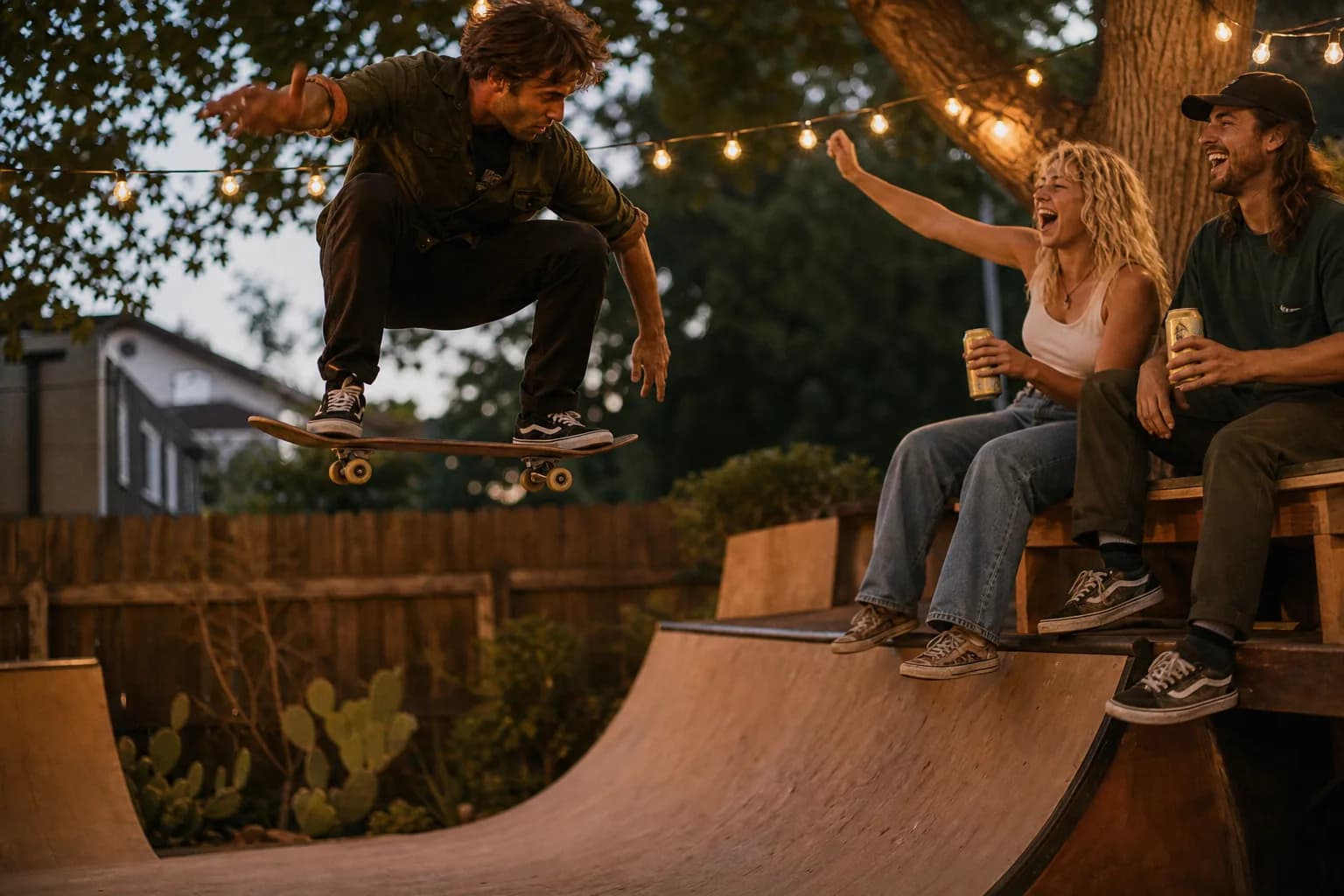
A ramp is a hangout with a soundtrack of wheels. Done well, it sits at the edge of the yard, drains, and leaves the patio for people who are done skating. Done poorly, it is a plywood mountain in the view. Start with what will actually get ridden — most home ramps are mini ramps and quarter pipes, not full bowls.
A single transition against a fence or pad. Lowest footprint, still enough to keep a board in the family.
The backyard standard: two transitions and a flat bottom, often 3–4 feet tall. Friends can actually session it.
A mini plus a ledge, rail, or bank-to-bank. Feels like a tiny park without eating the lawn.
2026 U.S. residential ballparks, not bids. Site work, permits, and finishes can move a project a full tier.
Entry
$3k–$8k
Kit quarter pipe or modest DIY mini, masonite or similar surface, placed on an existing pad.
Mid
$8k–$25k
Proper mini ramp, better surface (Skatelite-class), some coping, maybe a small ledge.
Premium
$25k–$80k
Custom wood or concrete, bowl or full street pocket, drainage, lighting, sited as architecture.
Tip 1
Point the open face away from the house and the neighbor's bedroom. Sound is the real constraint, not space.
Tip 2
A concrete or paver pad under the ramp beats sitting it on dirt. Water is what kills backyard ramps.
Tip 3
If kids will age out of it in five years, design it to unbolt. Concrete is a marriage.
Tip 4
Add a bench and a hose bib. Sessions last longer when there is somewhere to sit and a way to wash off.
Sports Courts
Basketball, multi-sport tiles, pickleball — a court that becomes the neighborhood's gravity well.
Inground Trampolines
In-ground and sunken trampolines — play that sits flush with the lawn and still feels like a destination.
Backyard Design Ideas
A planning hub: sun, circulation, and which feature should actually be the star of the yard.