Entry
$6k–$12k
Quality inground model, excavation, basic drainage, net. Lawn patched around it.
Hangout idea
The jump that does not dominate the skyline.
An inground trampoline is how you keep the energy in the yard without parking a giant ring in the middle of the view. Flush with the lawn, it becomes a gathering spot kids actually use and adults do not hate looking at. Safety netting, drainage, and a pad around the edge are the unglamorous parts that decide whether it lasts.
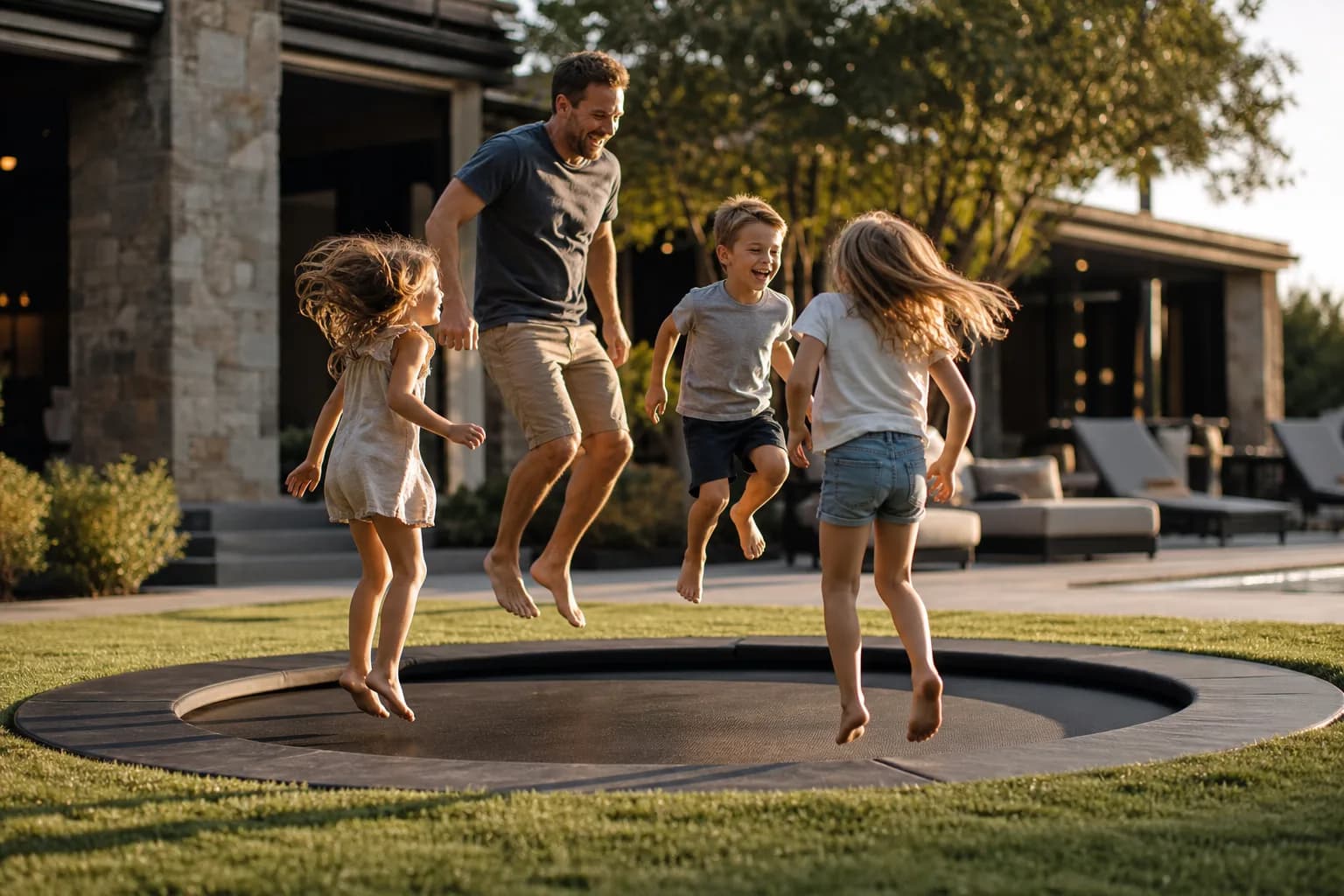
A round or oval trampoline set level with the grass. Lowest visual impact, still a magnet for kids.
Trampoline plus a padded surround, a bench, and maybe a shade sail. The hangout version, not just the toy.
Trampoline paired with a court, a path, and planting so it reads as a designed zone instead of equipment.
2026 U.S. residential ballparks, not bids. Site work, permits, and finishes can move a project a full tier.
Entry
$6k–$12k
Quality inground model, excavation, basic drainage, net. Lawn patched around it.
Mid
$12k–$22k
Larger bed, better surround, drainage done properly, a sitting edge.
Premium
$22k–$40k
Custom pit, padded deck, shade, lighting, integrated into a play landscape.
Tip 1
Drainage is not optional. A trampoline pit that holds water is a mosquito pond by July.
Tip 2
Keep a 6–8 foot clear zone around the net. Planting can frame it; it should not crowd the jump.
Tip 3
If the yard also has a pool, put the trampoline well away and on the house side of any fence. Mixing the two is how rules get broken.
Tip 4
A simple bench in the shade is how parents stay outside instead of watching from the kitchen window.
Sports Courts
Basketball, multi-sport tiles, pickleball — a court that becomes the neighborhood's gravity well.
Skate Ramps
Quarter pipes, mini ramps, and small street courses — built to last and sited so the rest of the yard still works.
Backyard Design Ideas
A planning hub: sun, circulation, and which feature should actually be the star of the yard.